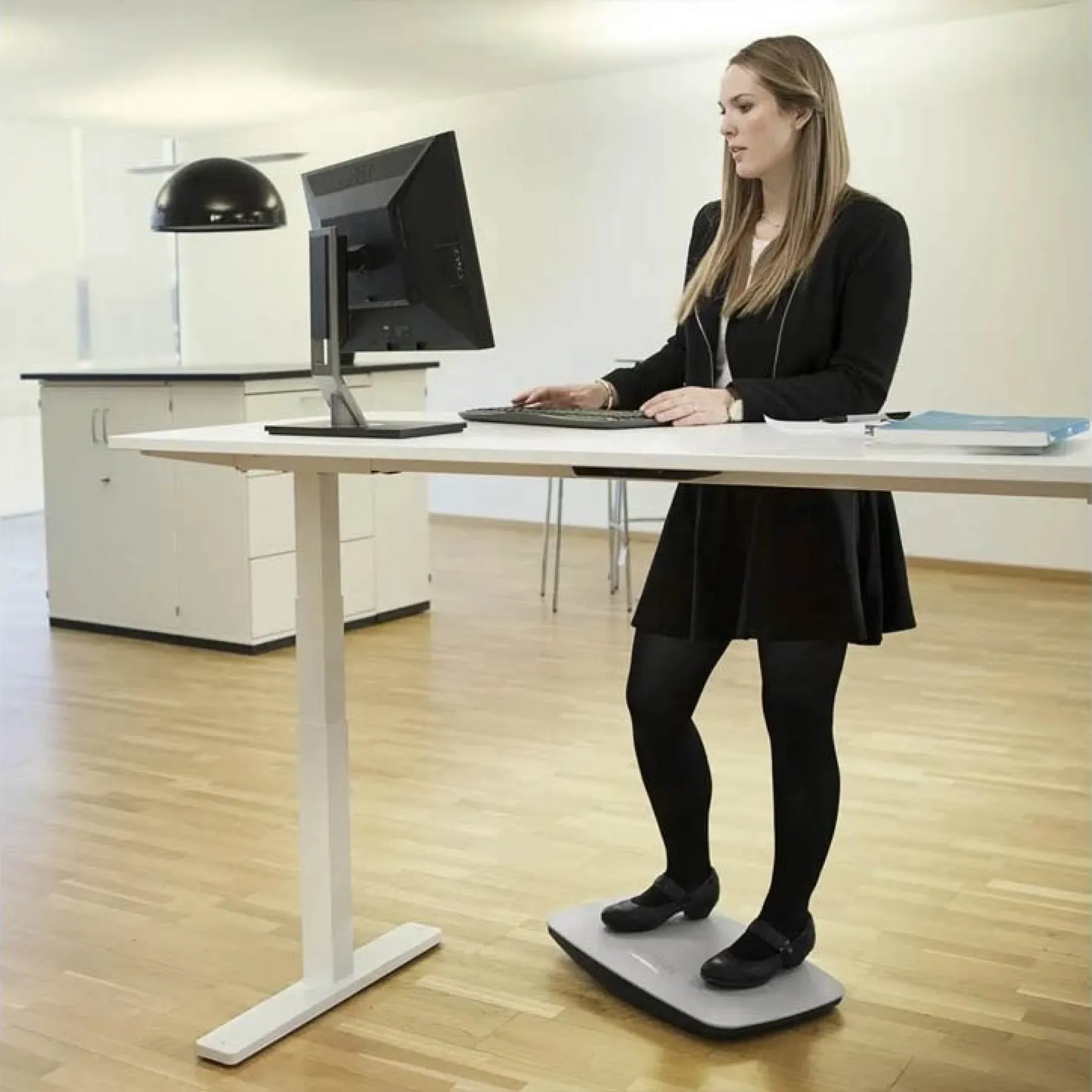
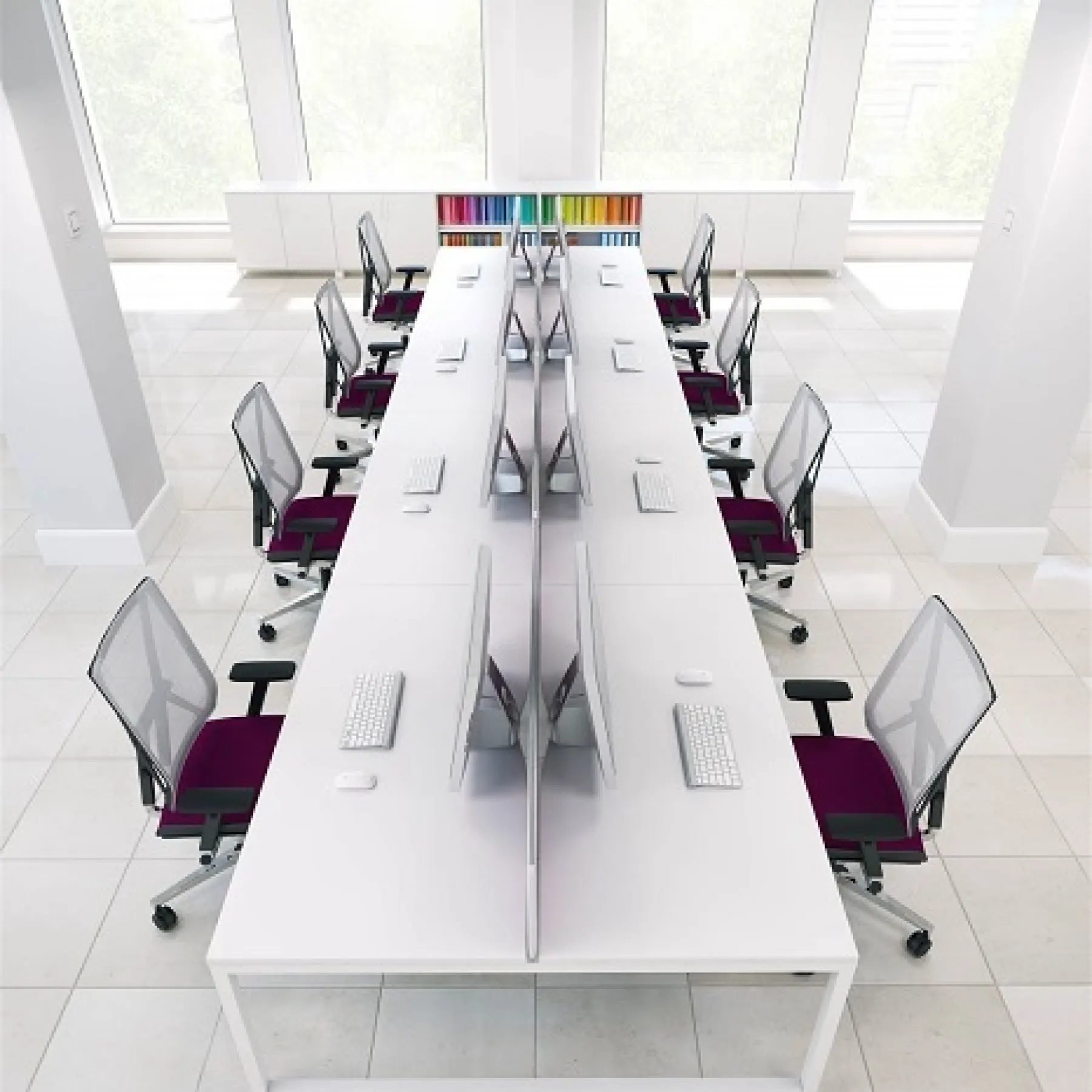
A bench desk is a long, rectangular desk system that provides workstation space for several people at once. Rather than giving each employee a separate freestanding desk, bench desking joins individual desk positions together on a shared frame — usually in banks of two, four or six — so a whole team can sit together on one continuous run of desks.
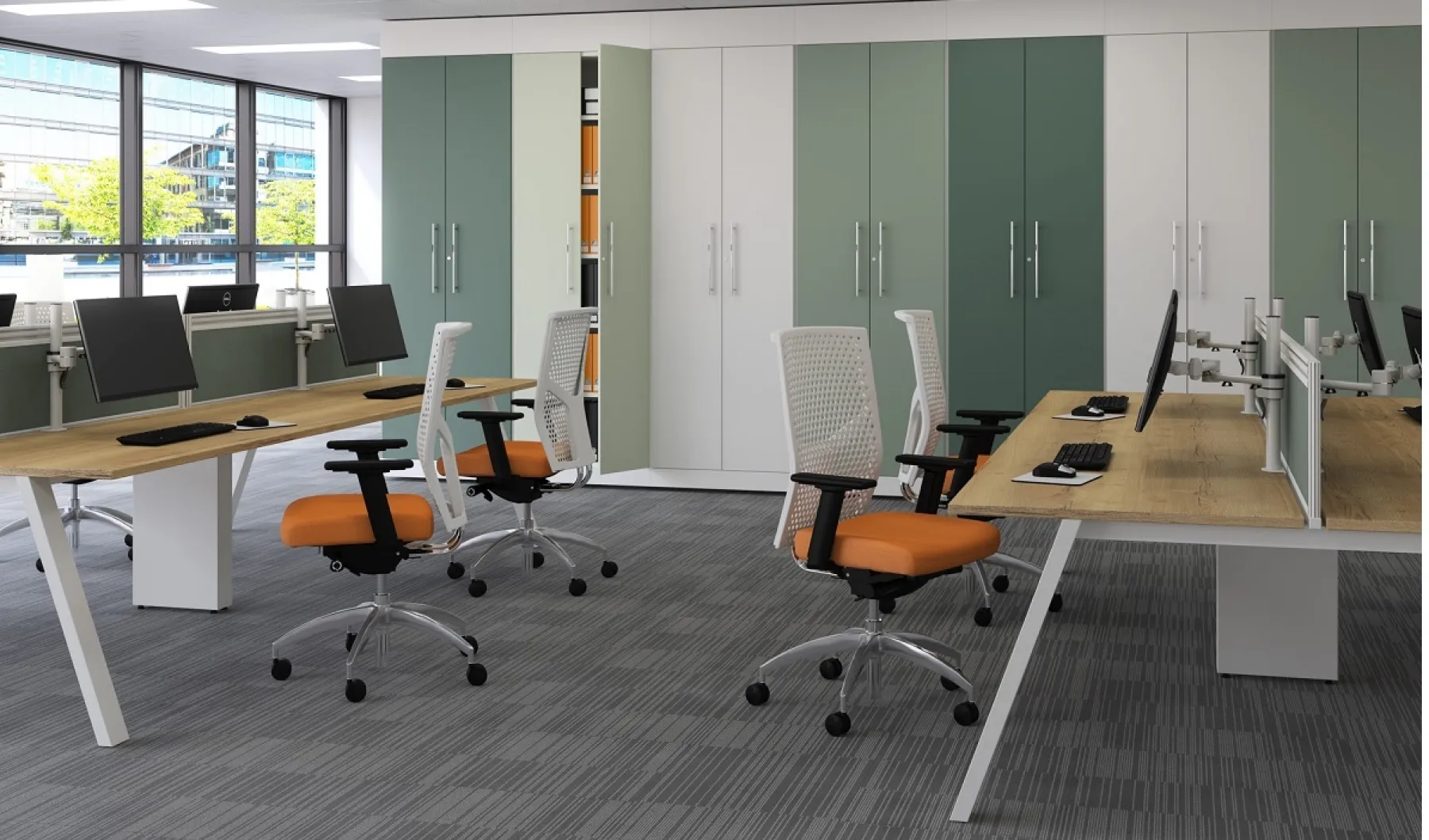
In its simplest form a bench desk is a shared table, but modern bench desking systems are far more sophisticated: shared legs and frames, built-in cable management, and add-ons such as desk dividers, monitor arms and under-desk storage make them the standard choice for today’s open plan office.
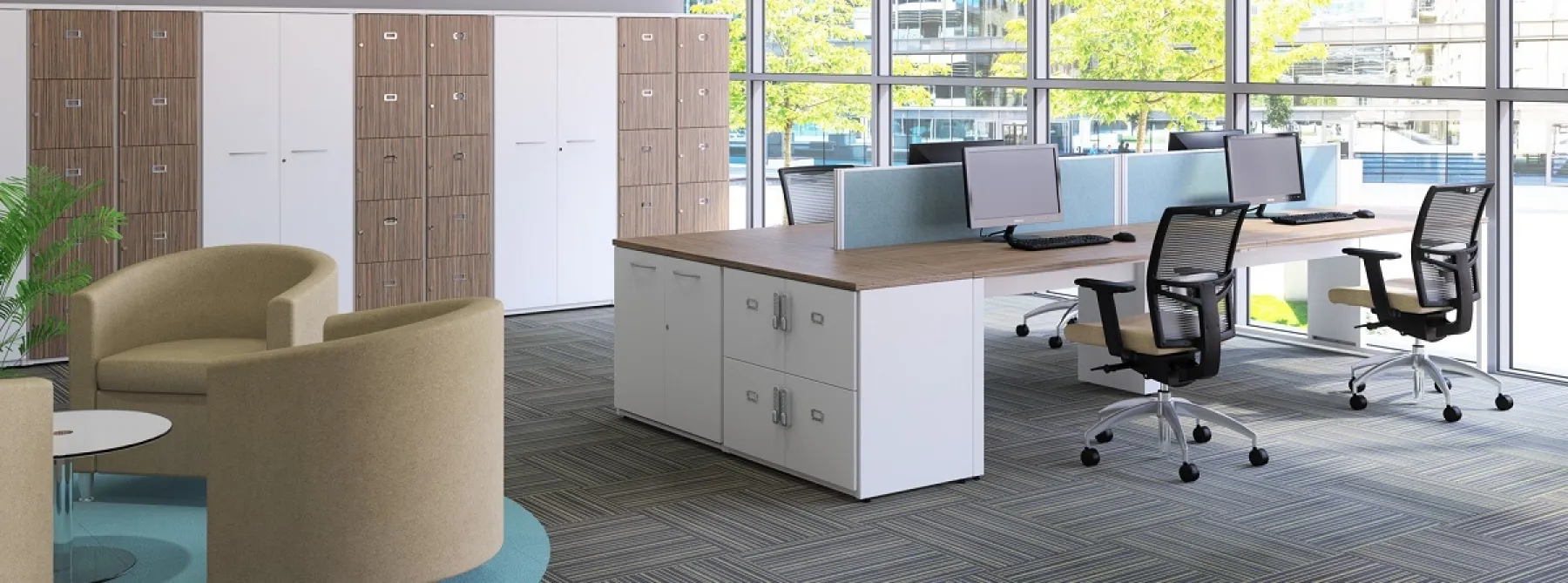
The biggest driver behind the rise of the bench desk has been the change in the way offices are laid out.
Fifteen to twenty years ago, it was normal for businesses to split departments into separate rooms and offices connected by corridors. That has changed completely — most companies now favour open plan spaces that encourage collaboration and make better use of floor area, and bench desks are the natural fit for this environment. They offer simplicity, cost effectiveness, and they save a significant amount of space.
Technology has accelerated the trend. Office computing has become much smaller — flat screens, laptops and docking stations need far less desk space than the equipment of the past — and increasingly digital ways of working mean less paper and less personal storage. The result is that businesses can comfortably accommodate more people in the same amount of space, while freeing up room for meeting areas, breakout spaces and collaboration zones.
Cost matters too. Because bench desks share legs, frames and cable trays between positions, a bank of bench desks almost always works out cheaper per person than the equivalent number of individual desks. Whenever office-fitting budgets come under pressure, bench desking is where businesses turn.
Bench desking is modular, which is one of its biggest strengths. The most common configurations are:
Because most ranges offer extension kits, you can start with a bank of four and grow to six, eight or more without replacing what you already own — a real advantage for growing businesses.
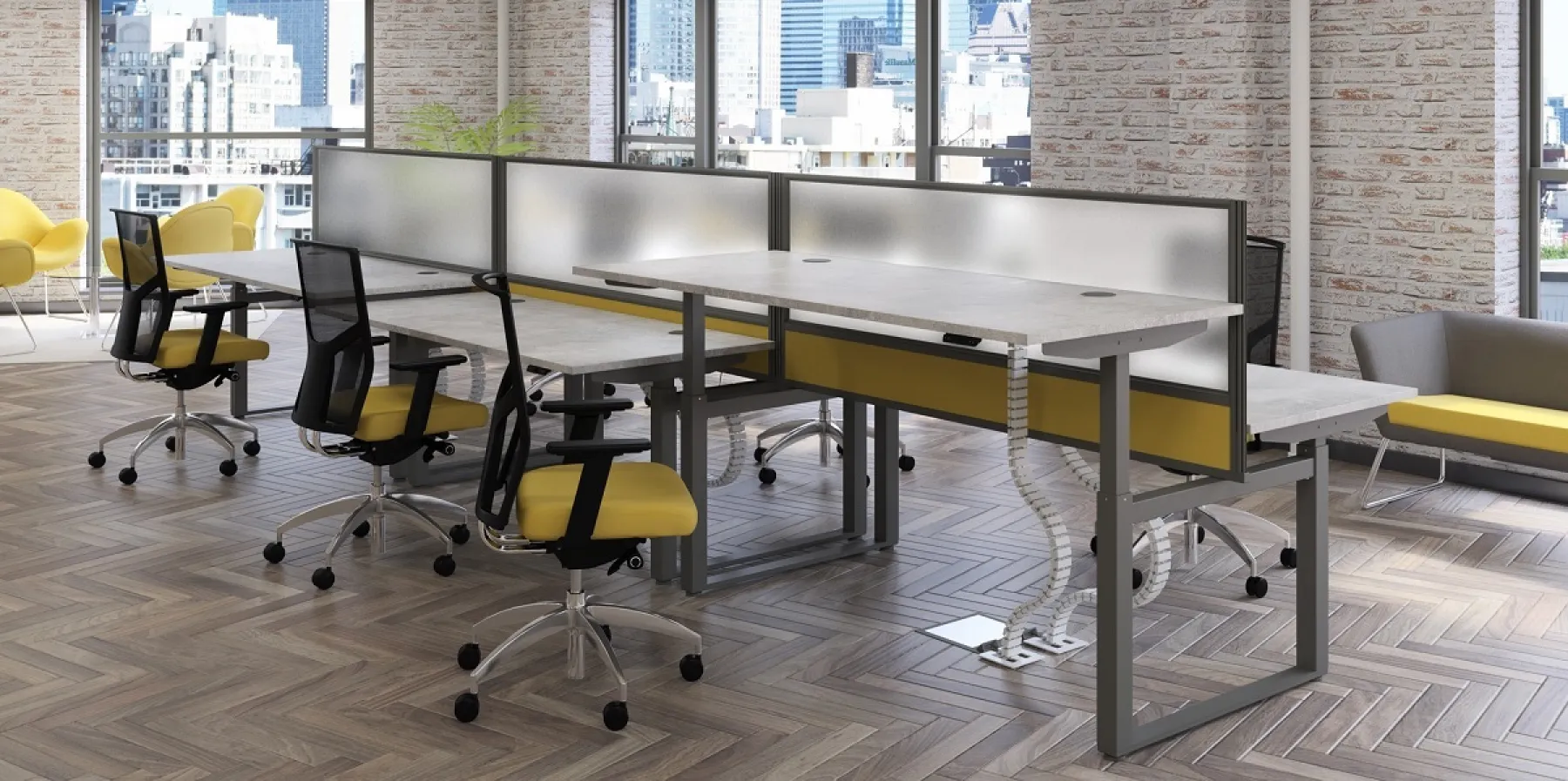
To add a modern touch to your office design you can choose from a wide range of finishes — white, grey, oak, walnut and beech are all popular — alongside more traditional looks. Frames typically come in white, silver or black to match your scheme.
Bench desks also solve one of the messiest problems in any office: cables. Typically, bench desks share components to create less leg clutter, and most ranges feature excellent cable management — sliding tops, cable risers and trays, integrated power modules and portals that keep power and data tidy and out of sight.
As a guide, entry-level single bench desks start from around £179 (excl. VAT), with banks of four from around £572 and banks of six from around £842 in our Nova U-Leg bench desk range. Premium wood-finish ranges and back-to-back systems such as the Formetiq SYSTM back-to-back bench desks sit above that. You can browse the full selection, filter by the number of people you need to seat, and compare ranges in our bench desks collection.
Bench desks are the ideal space-saving and cost-saving solution for open plan offices, and they suit hot desking and hybrid working particularly well — unassigned bench positions are easy to book, share and keep clear. They’re also a great platform for team working, keeping whole departments together and making communication effortless.
If your people need more privacy or acoustic separation, bench desks can be fitted with desktop screens and dividers, or combined with traditional desking elsewhere in the office — you’ll find plenty of options across our full desking range. And if you’re thinking about wellbeing as part of your office refit, it’s worth considering height adjustable desks alongside or within your bench layout.
Individual positions are typically 1200mm–1600mm wide and 700mm–800mm deep per person. For most office workers with one or two monitors, a 1400mm x 800mm position is a comfortable standard.
A normal desk is a freestanding unit with its own four legs; bench desks share a frame between multiple positions. That shared structure is what makes bench desking cheaper per person, tidier underneath and easier to extend.
Yes — most ranges offer extension units that bolt onto the existing frame, so you can grow a bank of four into a bank of six or eight as your team expands.
Extremely well. Uniform, unassigned positions with shared power and cable management are exactly what hot desking and hybrid working need.
Bench desks are the ideal space and cost-saving solution for large open plan offices, and with more businesses rethinking their layouts every year, they’re more popular than ever. If you’d like help planning a bench desking layout for your space, get in touch with the LOF Direct team — we’re always happy to advise.
We like to work with the best office furniture manufacturers available, so from office seating manufacturers in Northamptonshire to office furniture manufacturers in Lithuania, we have access to them all. This means we can bring the best in office furniture designs direct to you at fantastic prices.